Watching the whales
23/07/25 02:45
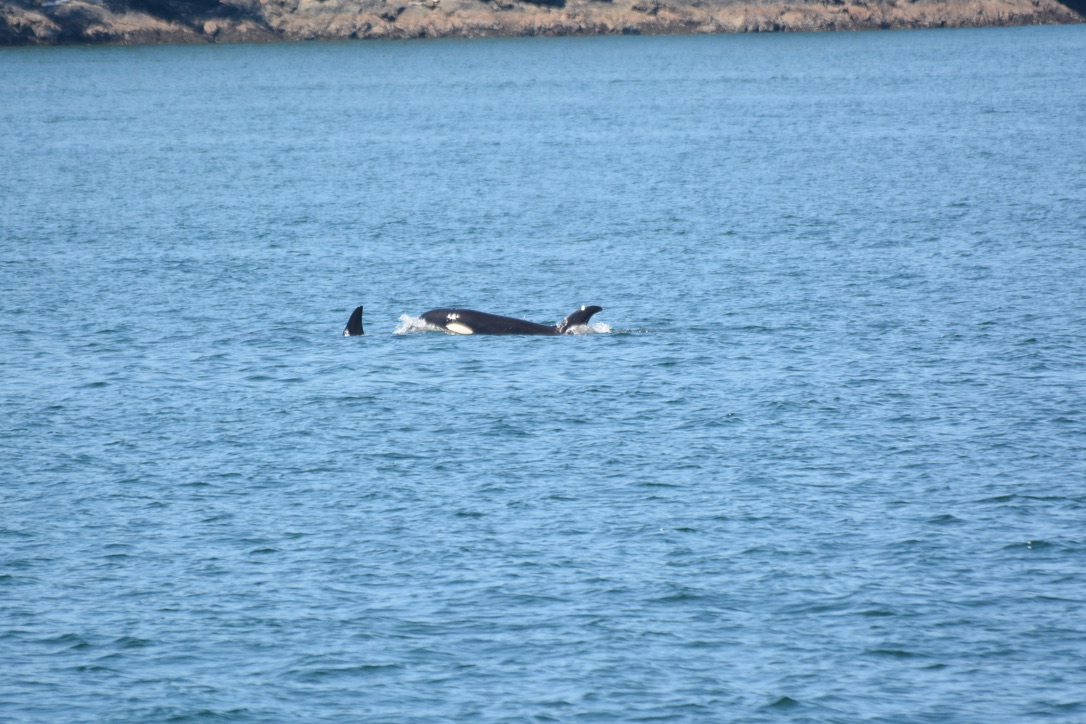
Before we retired we planned a special celebration for our 40th wedding anniversary. Instead of a party at the church or a public reception, what we wanted most was time with our adult children and their spouses. At the time we had only one grandchild and so the dynamics of getting everyone together were a bit less complex. However, since both of our children lived far from us and far from each other, it took planning and coordination to get everyone together. We decided that meeting in the Pacific Northwest would be best because that is where the family with the grandson lived. We found a resort with spaces for recreational vehicles that also offered camp cabins on Fidalgo Island near Anacortes, and we made reservations. We pulled our camp trailer from South Dakota. Our daughter and her husband flew in, and our son and his family drove up from Olympia, where they were living. One of the highlights of that trip was a cruise on a whale watching boat. We saw a pod of orcas of the Bigg’s/Transient group, and also got a distant view of a Minke whale. Additionally, we saw harbor seals, sea lions, and porpoises. We had a wonderful time on the water and have fond memories of the adventures we shared.
A dozen years later, we now have five grandchildren and the logistics of getting people together are more complex. However, since we now live near our son and his family, the easiest way to get everyone together is for our daughter and her family to come to the Pacific Northwest. They are able to visit most years, and this year we worked out a day to take another whale watching cruise. It was decided that the adventure was a bit long for the youngest grandson, so he and his mother stayed home, but the other nine of us headed to the terminal to board our boat for the day.
I love the marine life of the Salish Sea, and I enjoy watching from the shore nearly every day. We are treated to visits by migrating gray whales each spring, and harbor seals visit our bay and the harbor just north of our home. There are a variety of birds, including several species of cormorants, gulls, herons, eagles, ducks, geese, swans, and more. We see jellyfish, sea stars, and urchins in the tidal pools. Seeing orcas, however, is a relatively rare occurrence. A few Southern Resident orcas entered Drayton Harbor a short while ago, and the newspaper obtained good pictures of them, but we missed seeing them in person.
A whale watching cruise is a pretty reliable way of getting close to orcas. Marine mammals are wild animals and roam free, so a sighting is not guaranteed. However, the cruise operators have a private network called the Pacific Whale Watch Association. The PWWA shares the location of whales using a private radio network and an app. The captains of the cruise boats have a good understanding of where the whales are and which direction they may be traveling before the boat leaves the dock. They plan their routes to give their passengers a good chance of observing the magnificent creatures.
We weren’t disappointed yesterday. A small pod of four of the Biggs/Transient population were spotted and our boat was able to cruise near them for about an hour before we had to turn back to the harbor. We were able to take a lot of pictures and got close enough to hear them as they surfaced.
I have mixed feelings about the cruise boats. Our boat was part of a parade of a dozen or more commercial whale watching operations. The boats follow strict rules about how close to approach the animals and how to operate near them, and they cooperate with law enforcement agencies to help enforce these rules. The animals we observed yesterday are thriving. There is a slight baby boom occurring in the Biggs/Transient pods. The populations of migrating Gray and Humpback whales are also currently growing. The Southern Resident orcas, on the other hand, are threatened. Their numbers are declining, and experts have predicted that they may soon become extinct.
The names “transient” and “resident” are misleading. The two populations of orcas in the Salish Sea are genetically distinct and have different diets, but they share the same territory. The Biggs/transient orcas generally eat larger marine mammals including porpoises, seals, and sea lions. Members of the Southern Resident orcas eat fish, primarily migrating salmon. Salmon populations are in decline due to dams that block their spawning, pollution, and other factors. There have been some locally successful restorations of habitat, including the breaching of dams, where salmon populations are now recovering. However, these have not been large-scale enough to reverse the downward trend in the orca population. Orcas communicate and locate prey using echolocation, and the noise from boats, especially from large tankers and cargo vessels in the shipping lanes, is a threat to their usual patterns of behavior.
When orcas approach close to boats, there are restrictions on the speed at which the boats can be operated, and if they come within 400 yards of a boat, the boat must disengage its engine. Generally, a 1,000-yard distance is maintained by responsible mariners. The animals are wild, however, and may turn toward a vessel. Operators often cannot predict which direction the orcas will go.
We had an excellent day for observing orcas yesterday. The weather was just right, with a few clouds in the morning giving way to blue skies in the afternoon. Our cruise featured a generous lasagna lunch, and we had comfortable seating. We were able to roam around the boat and found good locations to observe and photograph the orcas.
Taking a whale-watching cruise won’t become a regular activity for our family, but it is an occasional activity that we all enjoy. Yesterday, we created memories about which we will be talking for decades, and that is indeed a treasure.