Bucking hay
18/07/25 02:44
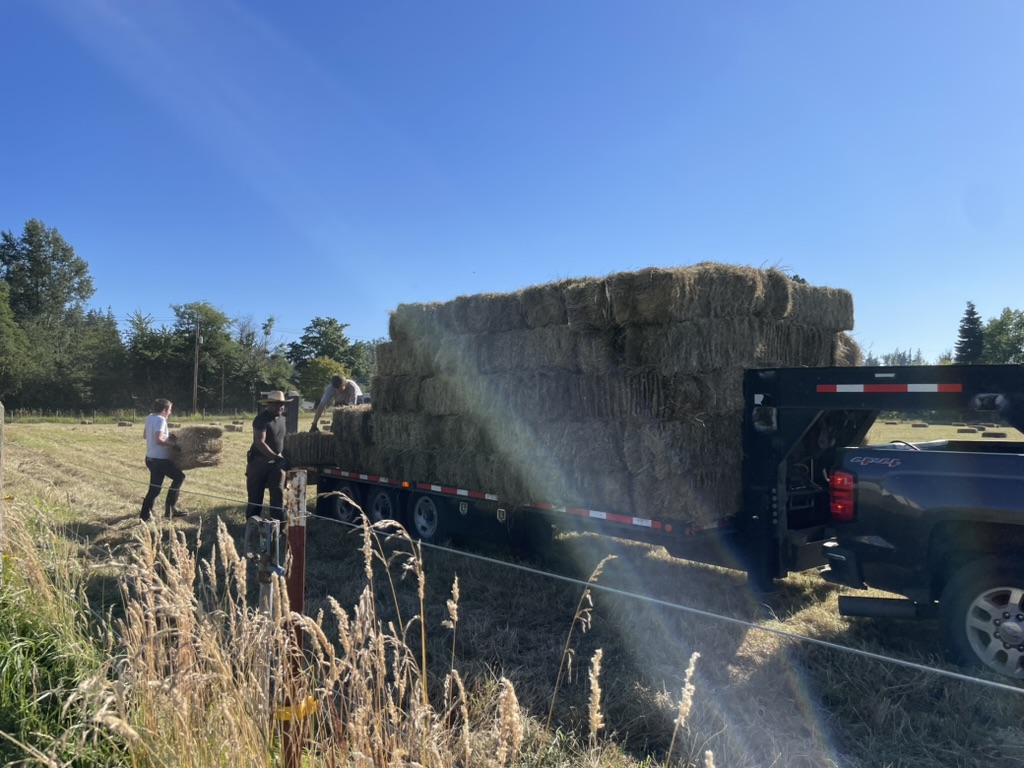
Yesterday morning, I was sitting on a log in a campground, talking to our 14-year-old grandson. He was reporting how his arms and shoulders were stiff from having bucked hay bales a couple of days before. I knew that the baler was working in their meadow and that there would be more bales to buck when he got home after lunch. I'd spoken to their ranch partner and promised that we’d get him home by 3 in the afternoon so he could help put hay into the loft. The process is pretty basic. They put up their hay in small square bales that are tied with two strings each. The bales weigh around 50 pounds each. Once the hay is baled, a driver pulls a trailer through the field. Two teens walk alongside the trailer, pick up bales from the field, and place them on the trailer. Two more stack them on the trailer. The two stackers have to be tall enough to stack the bales five rows high. Our grandson isn’t quite tall enough for the fifth row, so he is left with the job of picking bales and putting them on the deck of the trailer. It is hard work, and when the trailer is full, it's a short trip from the field to their barn. They have an elevator to take the bales from the trailer to the hay loft where they are stacked. In the winter, they can feed the hay directly from the loft by simply cutting and removing the plastic twine and pushing the hay into the feed troughs below. Our son’s farm is relatively small, and they usually winter only four or five cows, so they only have to feed a couple of bales a day. They have extra hay to sell each year.
I bucked bales the summer I turned 14, and I can remember how tired I got. We each had a one-gallon bleach bottle that had been rinsed out, filled with water, and placed in the freezer. The ice would melt throughout the day, and we’d drink the cold water. I emptied that one-gallon container every day. I also ended the summer in good physical condition.
There was a big difference between my experience and my grandson’s. We were hauling hay from fields my cousin had leased, which were about an hour from the home place, at least in the old truck we were using. That meant we had an hour to ride and rest before unloading and repeating the process. That meant only two trips per day. Our truck was smaller than the trailer used at our son’s place, so each load was probably only two-thirds of the loads they are making with the trailer. We did have to toss the bales higher onto the truck bed, but once you get the technique of swinging the bale, the height isn’t too much of a challenge, even for a short person like me. My grandson and I are the same height right now, so he’ll be taller than I by next year.
It has been pretty warm here, so they have been bucking hay for two or three hours in the evening, giving our grandson most of his days free while still being able to make a few dollars of spending money.
It has been a long time since I was a teenager, and the world has changed significantly. I had a bank account, but debit cards didn’t exist. I wrote checks. Our grandson uses a plastic card for all of his withdrawals. I received a paper statement in the mail and balanced my checkbook. He goes online to check his balance. Although his account is strictly monitored and he has limits on where he can spend money online, he is allowed to make some online purchases. I couldn’t have imagined online shopping when I was his age. I haven’t kept up with music and musicians, and often don’t know the bands he talks about. There is a lot in his world that is unfamiliar to me, and there are many things from my childhood that are ancient history to him. The bales I bucked were tied with sisal twine. He grabs plastic string when he bucks a bale.
But we both know the feeling of lying in bed with our shoulders throbbing. We know what it feels like to be so tired that it's a relief to have the truck filled to get a break, no matter how short. We know the feeling of working so hard that you don’t talk, and the relief of stopping work to talk, even for a few minutes. We both know what it is like to be so thirsty that a single glass of water isn’t enough. And we both know that when you work outside in the sun, a bit of shade and a breath of breeze are enough.
Susan and I didn’t raise our children on a farm. They didn’t learn to work from farm chores. Still, they both became hard workers. Our son comes home from a long day at work and spends an hour bucking and stacking hay in the evening before dinner. In the winter, he feeds a couple of bales to the cows before heading off to the office. More importantly, he is giving his children opportunities to work and to learn the benefits of working.
Childcare experts write articles about the importance of getting children away from screens and outdoors. Our grandchildren are growing up with outdoor chores built into their lives. In addition to stacking hay, there is firewood to stack, potatoes to dig, and plenty of other chores. In the winter, bringing in firewood and feeding animals is part of their routine. They have a computer and are learning the ways of contemporary society, but they also live on a farm that beckons them outdoors every day.
I’m grateful that our grandson and I share similar experiences. I hope he one day finds that kind of connection with his grandchildren.